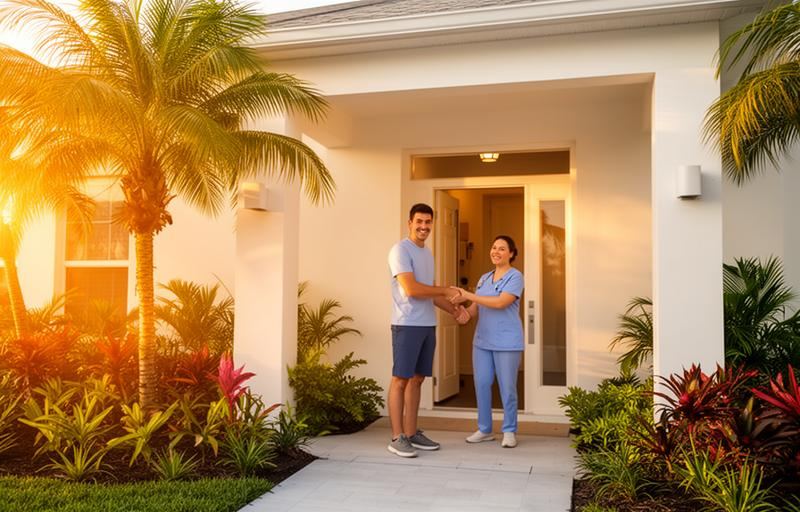
A Practical Guide for Families Navigating IDD Residential Care in Central Florida
Finding the right group home for a loved one with intellectual or developmental disabilities (IDD) is one of the most important decisions a family will ever make. In Orlando and across Central Florida, options vary widely — in quality, philosophy, staffing, and the level of medical support they can actually provide. This guide walks you through exactly what to look for, what questions to ask, and what red flags to watch for.
Florida has over 40,000 individuals on the iBudget Waiver waitlist. The average wait is 10+ years. Don't wait to begin evaluating your options.
1. Licensing and Regulatory Standing
Every legitimate group home in Florida must be licensed by the Agency for Persons with Disabilities (APD). This is non-negotiable. Licensing ensures the home meets state standards for staffing ratios, safety, care protocols, and resident rights.
Before touring any facility, verify their licensure status directly with APD. You can also check for any past violations, deficiency citations, or corrective action plans. A home with a clean inspection history isn't just preferable — it's a baseline standard.
- Ask for their APD license number and verify it online.
- Request the last 2 years of inspection reports.
- Ask if they have ever had a license suspended or placed on probation.
2. Staffing: Ratios, Training, and Turnover
Staffing is the single biggest predictor of care quality in any group home. Florida's DSP (Direct Support Professional) turnover rate sits above 50% statewide — meaning most group homes cycle through half their workforce every year. That instability directly affects your loved one's consistency of care, relationship continuity, and safety.
A high-quality home invests in staff retention. Ask about average tenure, how they handle shift coverage, and what ongoing training looks like beyond mandatory minimums.
- What is the staff-to-resident ratio on day shift? Evening shift? Overnight?
- How are staff trained on behavior support and de-escalation?
- What is the average length of employment for DSPs in this home?
- How are medical emergencies handled at 2am?
💡 A home that can't answer staffing turnover questions is almost certainly not tracking it — which is itself a red flag.
3. Medical Support Capacity
Standard group homes provide assistance with daily living activities, but many individuals with IDD — particularly those with complex medical needs — require a much higher level of support.
Medical group homes provide nursing oversight, medication management, health monitoring, and coordination with specialist providers. If your loved one has a seizure disorder, g-tube, tracheostomy, or other complex medical need, a standard group home simply cannot safely serve them. Ask directly about the medical infrastructure.
- Is there a registered nurse on staff or on-call?
- How are medications managed and documented?
- Can they support individuals with complex medical equipment?
- What is the protocol when a resident's health status changes?
4. Individualized Care Planning
Florida law requires that every resident have an Individualized Support Plan (ISP), but the quality of those plans varies enormously. A meaningful ISP isn't a checkbox document — it drives daily routines, therapy coordination, goal setting, and health management. Ask to see a sample (anonymized) ISP and how goals are tracked and updated over time.
💡 The best indicator of care quality is whether staff can speak specifically about a resident's goals and progress — not just recite their diagnosis.
Reading this because you are trying to work something out for someone you love? You can tell us about them at the bottom of this page. A real person reads every inquiry.
5. Community Integration and Quality of Life
A group home should be more than a safe place to sleep. Look for evidence that residents are actively engaged in community life — employment programs, day habilitation, volunteer activities, social outings, and faith communities. Ask for a sample weekly schedule and look for variety, choice, and meaningful activity.
- What community activities are available?
- How are individual preferences and choices incorporated into daily routines?
- Are residents connected to day programs, employment, or vocational training?
6. Family Communication and Transparency
A trustworthy provider welcomes family involvement. They communicate proactively — not just when something goes wrong. Ask how often you'll receive updates, what the incident reporting process looks like, and how your input will be incorporated into the ISP process.
Providers who are evasive about access, slow to return calls, or resistant to unannounced visits should raise concerns. You should always be able to visit your loved one.
What Makes Audubon Gardens Group Different
At Audubon Gardens Group, we specialize in medically complex individuals with IDD. Our homes are staffed with nursing oversight, built around individualized care plans that drive measurable health outcomes, and designed to support quality of life alongside medical needs. We are licensed by APD, and we maintain transparency with every family we serve.
We know how to build Medicaid funding packets that ensure your loved one receives the full scope of services they're entitled to. And we know how to execute — because we've done it, and we have the outcomes to show for it.
Ready to take the next step?
Contact Audubon Gardens Group today at info@AGGCares.com or call (689) 777-2892. Visit us at aggcares.com to learn more about our homes and services.
Frequently Asked Questions
What are the most important features to consider when choosing a group home in Orlando?
Prioritize staff-to-resident ratios, staff training in IDD care, range of daily activities, cleanliness and safety of the environment, proximity to medical facilities, and community resources.
What questions should I ask about personal care and support services?
Ask about personalized care plans, assistance with daily living activities, medication management, and access to therapy services. Ensure the group home aligns with the individual's specific support needs and APD guidelines.
How do Orlando group homes support family involvement?
A good group home will encourage open communication with families, providing regular updates on well-being and progress. Inquire about visitation policies, family meetings, and how they involve families in care planning.
Related Articles
Explore More Resources
Tell Us About Your Loved One
Share where things stand and a member of our team will review your inquiry and reach out promptly.
🌐 Our team speaks English, Spanish, Haitian Creole, and Portuguese. We're here to help your family in the language you feel most comfortable with.
Get in Touch
Fields marked with * are required.