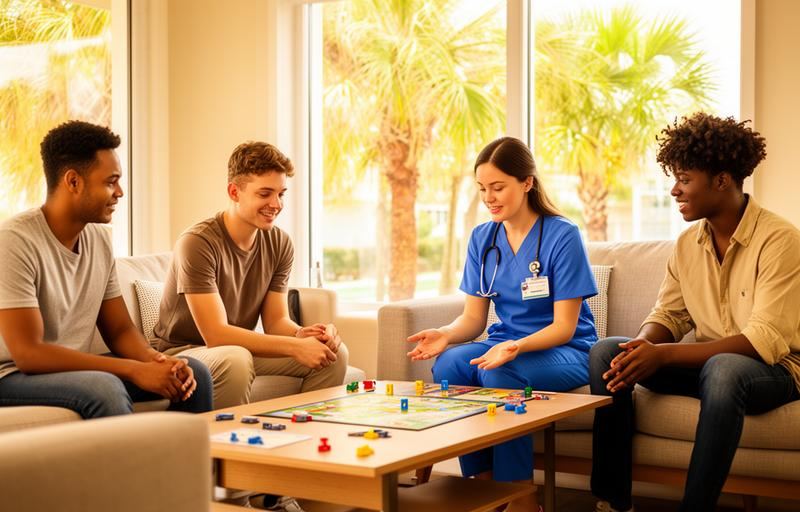
Behind the Role of the Direct Support Professional — The Heart of Quality IDD Care
If you ask most people what a Direct Support Professional (DSP) does, they might say something like "caregiver" or "assistant." Those words don't come close. DSPs are the backbone of every group home — the people who wake up with residents, navigate medical crises, de-escalate behavioral challenges, celebrate milestones, and build the kind of consistent, trusting relationships that directly determine quality of life for individuals with IDD.
At Audubon Gardens Group, we believe DSPs deserve to be understood — not just appreciated. This article takes you inside a real shift at Audubon Gardens Group, and explains what separates average support work from exceptional care.
6:00 AM — The Morning Handoff
A shift at AGG begins before most residents wake up. The overnight DSP completes a detailed handoff report: sleep patterns, any incidents, medication administration records, and notes on each resident's health and mood. Nothing is left to assumption. The incoming morning DSP reviews this information, asks questions, and steps into the home with full situational awareness. This handoff process isn't bureaucratic formality — it's how continuity of care actually works. A resident who had a difficult night needs a DSP who knows that before the day begins.
7:00 AM — Morning Routines and Personal Care
Every resident at AGG has a personalized morning routine documented in their Individualized Support Plan (ISP). For some, that means prompting and supervision. For others, it means hands-on physical assistance with bathing, grooming, dressing, and positioning. For medically complex residents, it also means checking vital signs, administering medications, and monitoring for any changes in condition.
What makes this different from a clinical environment is the relationship. A skilled DSP knows that Marcus prefers his coffee before getting dressed. They know that Elena communicates with her eyes when she's in pain. These details aren't in any manual — they're built through months of consistent, attentive presence.
💡 At AGG, we track these preferences and personal details formally in each resident's ISP so that even on coverage shifts, every DSP can deliver care that feels familiar and respectful.
9:00 AM — Health Monitoring and Medication Management
Many AGG residents have complex medical profiles — seizure disorders, cardiac conditions, diabetes, spasticity, or respiratory needs. Medication administration at AGG is done by trained staff under nursing oversight, with every dose documented in real time using our electronic health records system.
DSPs are trained to observe and report. They're not diagnosing — but they are the first to notice that a resident isn't moving their arm normally, or that their color seems off, or that their seizure lasted longer than usual. That observation, communicated quickly to our nursing team, can be the difference between a minor adjustment and a medical emergency.
11:00 AM — Community Integration and Skill Building
Quality group home care doesn't happen inside four walls. AGG residents participate in community activities, employment programs, day habilitation centers, religious services, recreational outings, and more. DSPs facilitate and accompany these activities — not as babysitters, but as active supporters of independence.
Skill-building is woven into daily routines. A trip to the grocery store isn't just an errand — it's an opportunity to practice money handling, social interaction, and decision-making. A DSP who understands this distinction is teaching and supporting, not just supervising.
2:00 PM — Behavioral Support and De-escalation
Some residents at AGG have behavioral support needs that require specific, trained responses. Outbursts, self-injurious behavior, and communication breakdowns are part of the reality for some individuals with IDD — and they require DSPs who are trained, calm, and consistent.
AGG DSPs are trained in Positive Behavioral Support (PBS) frameworks. They understand that behavior is communication. They work from each resident's Behavior Support Plan, responding in ways that are safe, dignity-preserving, and therapeutically sound. What they do not do is improvise.
💡 Consistent behavioral responses across all shifts and all staff is essential. One DSP going off-script can undo weeks of progress. This is why training, documentation, and communication are non-negotiables at AGG.
6:00 PM — Evening Routines, Meals, and Wind-Down
Evenings at AGG look different for every resident. Dinner preparation (with varying levels of resident participation), medication administration, leisure activities, phone calls with family, TV, music, walks, and eventually, the preparation for sleep. For residents with medical needs, evening may also include additional monitoring, positioning changes, or equipment checks.
Reading this because you are trying to work something out for someone you love? You can tell us about them at the bottom of this page. A real person reads every inquiry.
The evening shift is often when residents are most relaxed and communicative. A skilled DSP uses this time to strengthen connection, check in emotionally, and set the stage for a peaceful night.
What Makes a Great DSP
The best DSPs share a few qualities that can't easily be taught: genuine curiosity about the people they support, the emotional resilience to handle difficult moments without taking them personally, and a deep commitment to the dignity of every person in their care.
At AGG, we look for these qualities before we hire. And we invest in training, supervision, and retention strategies that keep great DSPs in their roles — because consistency of staff is one of the most important factors in resident wellbeing.
Why We're Hiring — and Who We're Looking For
Audubon Gardens Group is growing. We are looking for individuals who are passionate about this work, aligned with our mission of serving medically complex individuals with excellence, and ready to grow professionally in a team that takes quality seriously.
Prior experience in IDD care, healthcare, or education is helpful but not required. What we require is character, commitment, and the willingness to learn. We provide comprehensive training, competitive pay, and a culture that values every team member.
If this sounds like you — or if you know someone who would thrive in this environment — we'd love to hear from you. Submit a job inquiry through our website or reach out directly at info@AGGCares.com.
Ready to take the next step?
Contact Audubon Gardens Group today at info@AGGCares.com or call (689) 777-2892. Visit us at aggcares.com to learn more about our homes and services.
Frequently Asked Questions
What are the core responsibilities of a Direct Support Professional (DSP)?
A DSP's core responsibilities include assisting residents with daily living activities, implementing personalized support plans, and facilitating community integration. They play a vital role in promoting independence and well-being for adults with IDD.
How do DSPs at Audubon Gardens Group ensure individualized care?
DSPs work closely with individualized support plans to tailor care to each resident's unique needs, preferences, and goals. They focus on fostering individual strengths and providing person-centered support in all aspects of daily life.
What kind of training do DSPs receive?
DSPs undergo extensive training covering first aid, CPR, medication administration, behavioral intervention techniques, and state-specific regulations for supporting individuals with intellectual and developmental disabilities.
Related Articles
Explore More Resources
Tell Us About Your Loved One
Share where things stand and a member of our team will review your inquiry and reach out promptly.
🌐 Our team speaks English, Spanish, Haitian Creole, and Portuguese. We're here to help your family in the language you feel most comfortable with.
Get in Touch
Fields marked with * are required.