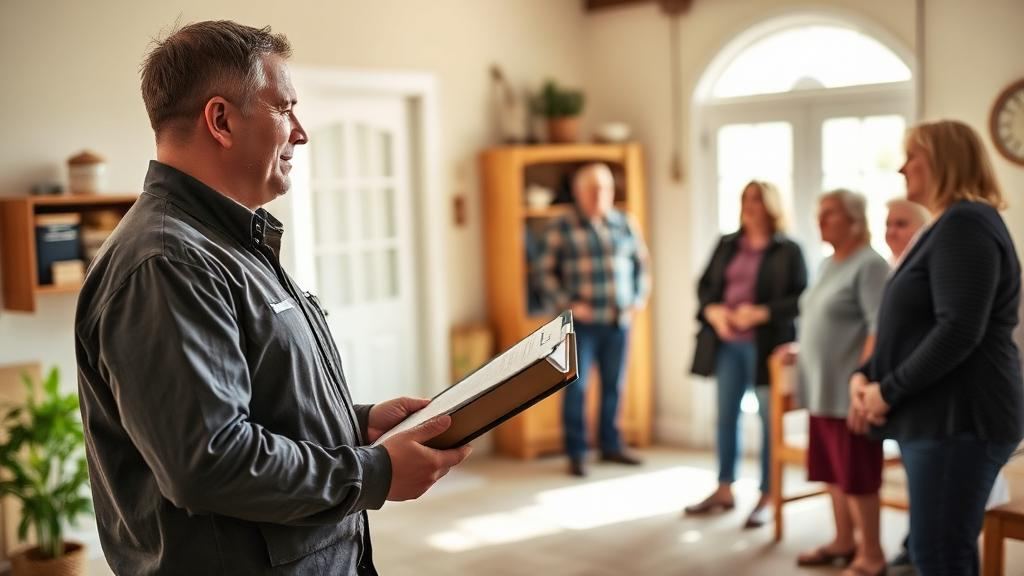
What Families and Guardians Should Know About Oversight in Florida's Group Homes
When your loved one lives in a group home, one of the most reassuring things you can know is that someone is checking. Not just once, not just on paper — but regularly, in person, with specific standards that have to be met. In Florida, the Agency for Persons with Disabilities (APD) maintains an active monitoring program for every licensed group home in the state. Here's what that actually looks like, and what it means for the person you care about.
How Often Are Group Homes Monitored?
Under current APD guidance, standard group homes in good standing are monitored on a quarterly basis — at least four visits per year. That shift away from monthly monitoring reflects APD's confidence in providers who maintain a clean record, while keeping more intensive oversight where it's needed.
Some homes are monitored more frequently. Newly designated group homes receive monthly visits until they have established a track record. Homes that have received citations related to health and safety — or that have been involved in abuse reports — return to monthly monitoring. Behavioral group homes, which serve individuals with more intensive support needs, are also monitored monthly.
Because group homes operate around the clock, seven days a week, monitors do not need an appointment to visit. While many visits are coordinated as a courtesy, APD can and does make unannounced visits. This is intentional — it helps ensure that the quality of care you observe on a tour day reflects the same standard your loved one experiences every day.
What Monitors Look For
APD monitoring visits cover both the care being provided and the physical environment. On the care side, monitors review:
- Incident reports and how they were handled
- Medication Administration Records (MARs) and medical appointment follow-ups
- Nutritional planning and meal documentation
- Behavioral support plans and their implementation
- Staffing levels and supervision practices
On the physical side, monitors inspect:
- The structural condition of the home — ramps, plumbing, general maintenance
- Water temperature (to prevent scalding)
- Medication storage and administration areas
- Fire inspection certificates and emergency preparedness documentation
Fire Safety Is Non-Negotiable
Fire inspections must be completed annually by a certified fire marshal, and they must be current at all times. APD now requires providers to submit not only the fire inspection report itself, but also the fire marshal's email verification confirming the inspection. Fire stations within the home must be individually inspected and approved. APD is taking a close look at fire safety compliance across all licensed homes.
Licensing updates effective November 1, 2025 have also streamlined the application process for providers: applications are now fully electronic through iConnect, no longer require notarization when completed digitally, and license renewals are handled entirely within the FORMS tab of the Group Home page. This modernization helps ensure that licensing records stay current and accurate.
When you visit a group home, it's completely appropriate to ask when their last fire inspection was completed and whether it passed. A well-run home will have that information ready.
Vehicle Safety and Transportation
APD has reinforced clear expectations around transportation safety. Consumers cannot be left unattended in vehicles for any reason. Group homes must have written procedures for transportation, including headcounts before and after every trip. Staff are required to complete vehicle checks at the start and end of every trip to confirm no one is left behind.
If your loved one is transported to medical appointments, day programs, or community outings, these are reasonable questions to ask any provider: What is your vehicle check procedure? How do you account for every person after a trip?
Reading this because you are trying to work something out for someone you love? You can tell us about them at the bottom of this page. A real person reads every inquiry.
Quality Assurance: The Bigger Picture
Beyond regular monitoring visits, Florida's APD system includes a broader quality assurance layer. An independent Quality Improvement Organization conducts reviews of group home providers, examining documentation, service logs, and compliance with Medicaid standards. Service logs are required to include the name of the person providing the service, the name of the resident receiving it, time in and out, the service name, dates, a meaningful summary of what occurred, and any health or safety follow-up needed. These aren't just administrative requirements — they are the documented record that your loved one's care is being delivered as planned.
Providers can also be subject to additional audits triggered by incidents, complaints, or medication errors. APD's Central Region maintains a dedicated complaint inbox at Central.Incidentreports@apdcares.org where families, support coordinators, and caregivers can report concerns directly. Those complaints are reviewed and investigated.
What You Can Do
You have every right to ask a group home provider about their most recent monitoring visit, their fire inspection status, and how they handle incidents. A provider who welcomes those questions is a provider who takes transparency seriously.
At Audubon Gardens Group, we believe that oversight isn't something to endure — it's something to welcome. Every monitoring visit is an opportunity to demonstrate that the care we provide meets the standard your loved one deserves.
Related Articles
- Incident Reporting in Florida Group Homes — What happens when something goes wrong, and how the system holds providers accountable.
- What Families Should Ask Before Choosing a Medical Group Home — Key questions and red flags to watch for when evaluating a home.
About Audubon Gardens Group
Audubon Gardens Group operates two licensed 24-hour nursing residential care homes in Orlando, Florida — The Garden at Bennett and The Garden at Ibis. We serve medically acute and complex adults under Florida's APD iBudget Waiver, providing not just care, but a life genuinely worth living.
To learn more about our homes or begin a conversation about placement, visit aggcares.com or contact our team directly.
Frequently Asked Questions
How often does APD monitor group homes in Florida?
Standard group homes in good standing are monitored quarterly — four visits per year. Homes with health or safety citations, abuse reports, or new designations receive monthly visits. Behavioral group homes are also monitored monthly.
Can an APD monitor visit without calling first?
Yes. Group homes operate 24/7 and APD monitors do not need an appointment. While many visits are coordinated as a courtesy, unannounced visits are permitted and do occur. This is intentional — it ensures the care your loved one receives every day meets the same standard you observed during your initial visit.
What happens if a group home fails a monitoring visit?
Homes with citations are moved to monthly monitoring and may be required to submit a Plan of Remediation — a corrective action plan approved by APD. Providers can request reconsideration of findings through the Quality Improvement Organization (QIO).
What is the iBudget Waiver and how does it relate to group home monitoring?
The iBudget Waiver is Florida's Medicaid program that funds residential and community-based services for eligible individuals with developmental disabilities, including group home residential habilitation. Both APD and AHCA have oversight authority over iBudget-funded homes.
Can I find out if a group home has had past monitoring violations?
You can contact APD's Central Region office to ask about a provider's compliance history. You can also ask the provider directly. A transparent provider will share this information willingly.
Related Articles
Explore More Resources
Tell Us About Your Loved One
Share where things stand and a member of our team will review your inquiry and reach out promptly.
🌐 Our team speaks English, Spanish, Haitian Creole, and Portuguese. We're here to help your family in the language you feel most comfortable with.
Get in Touch
Fields marked with * are required.